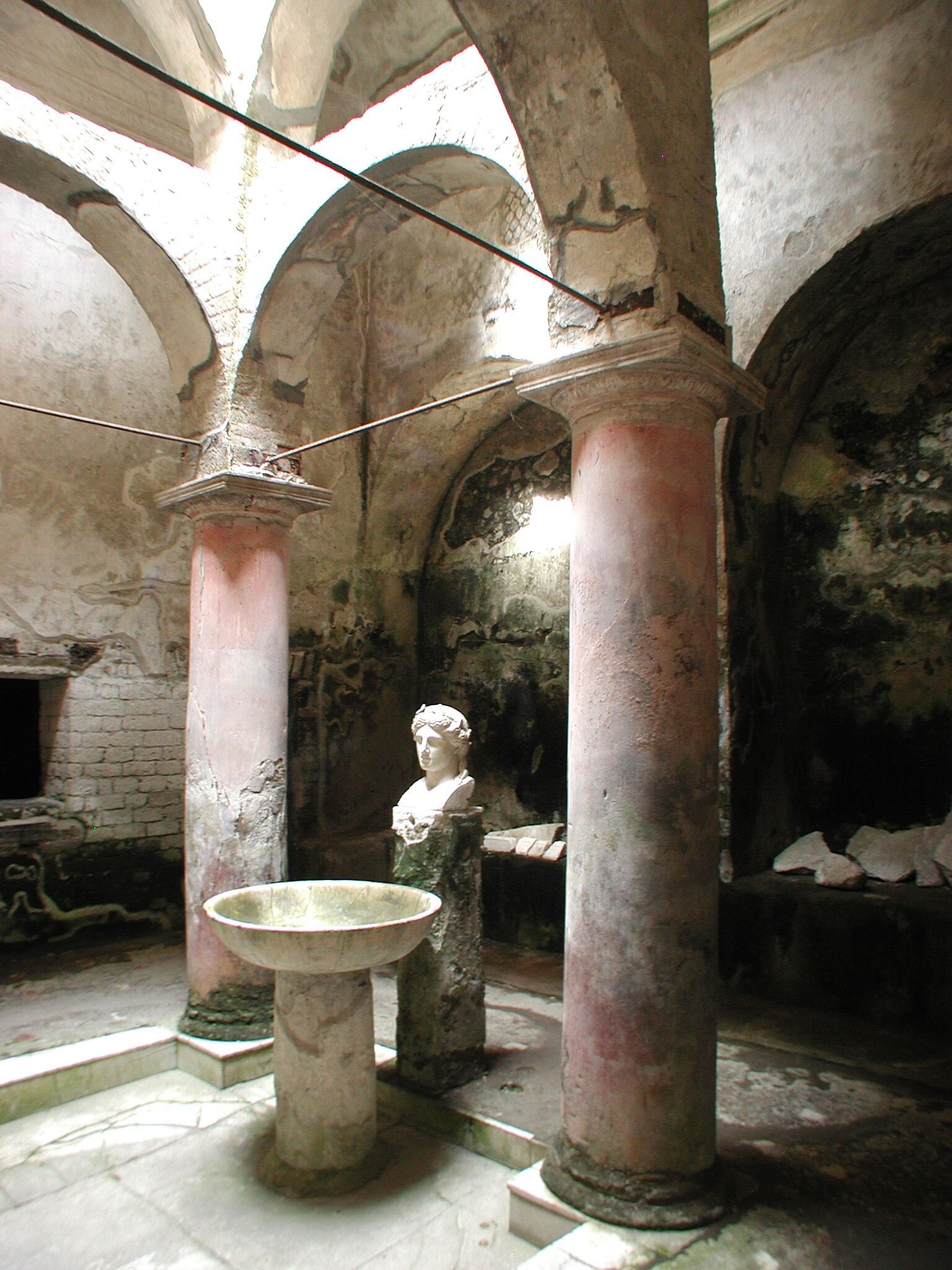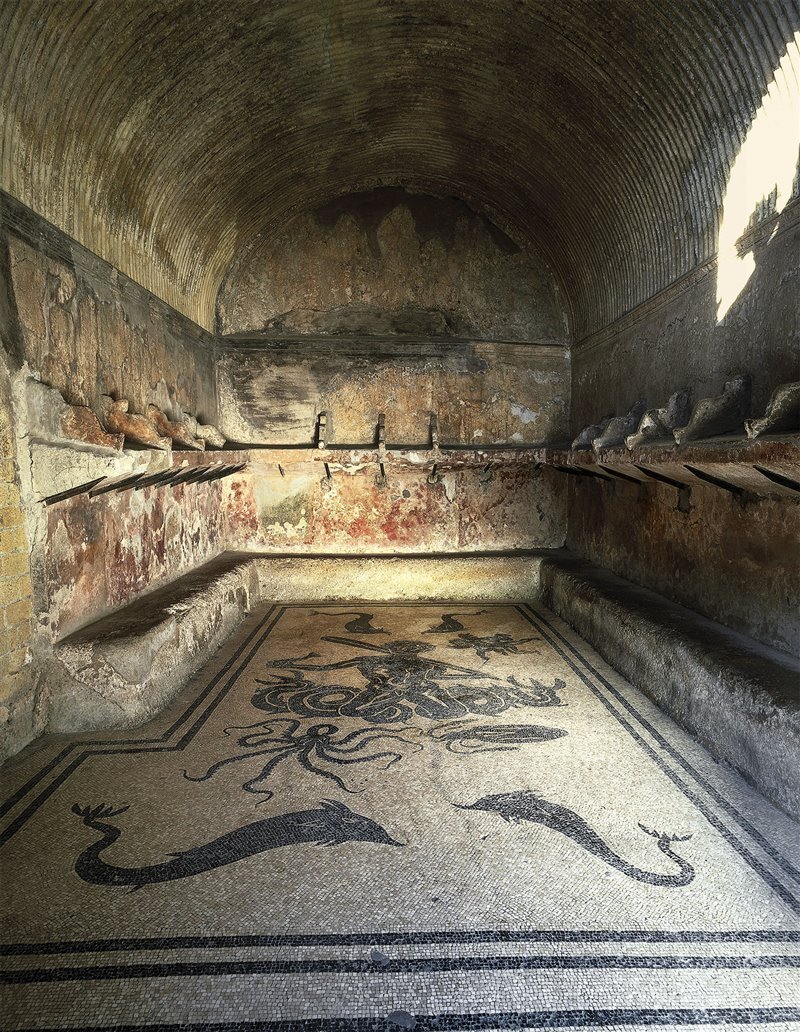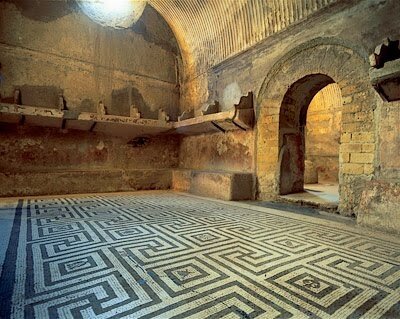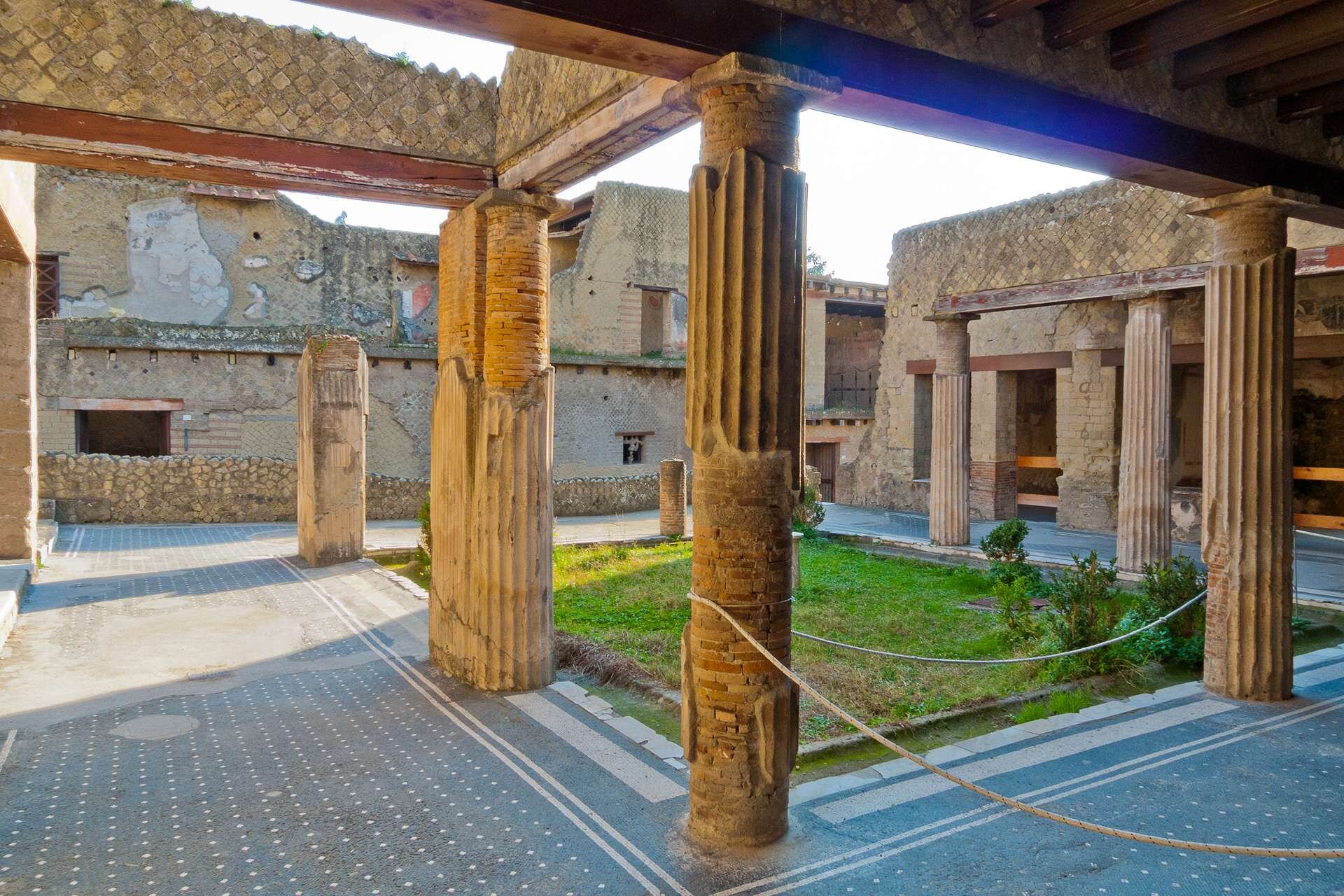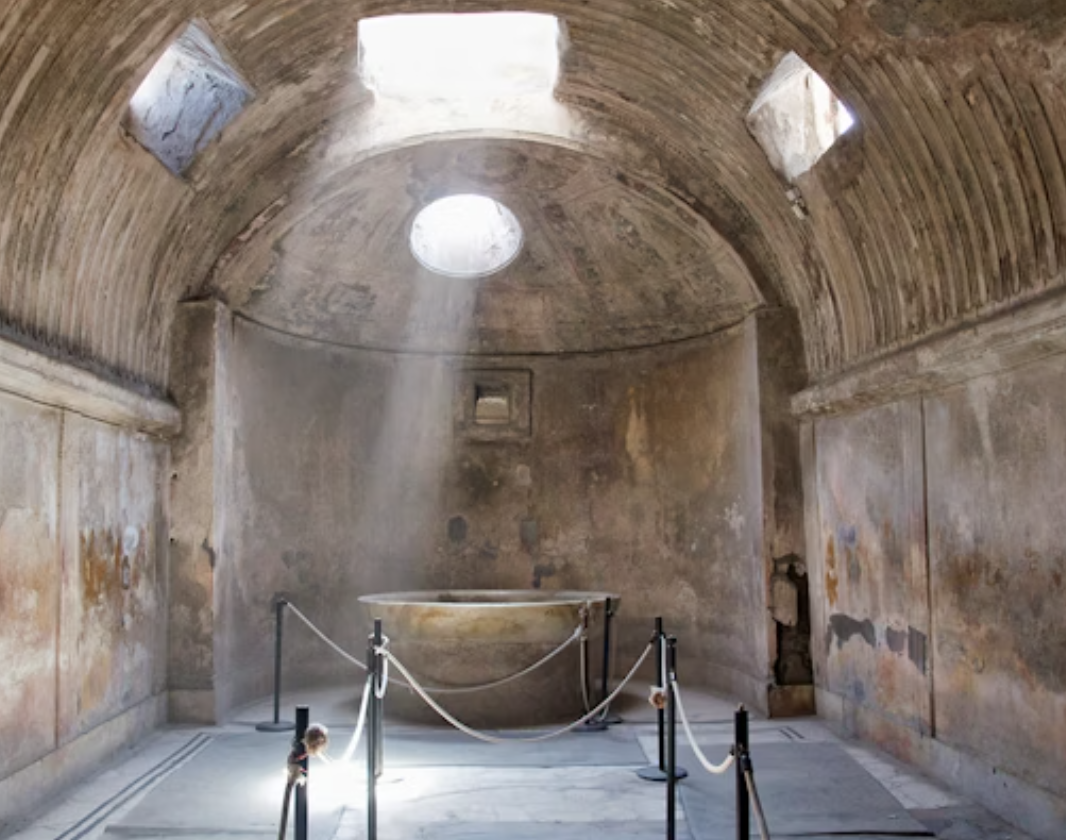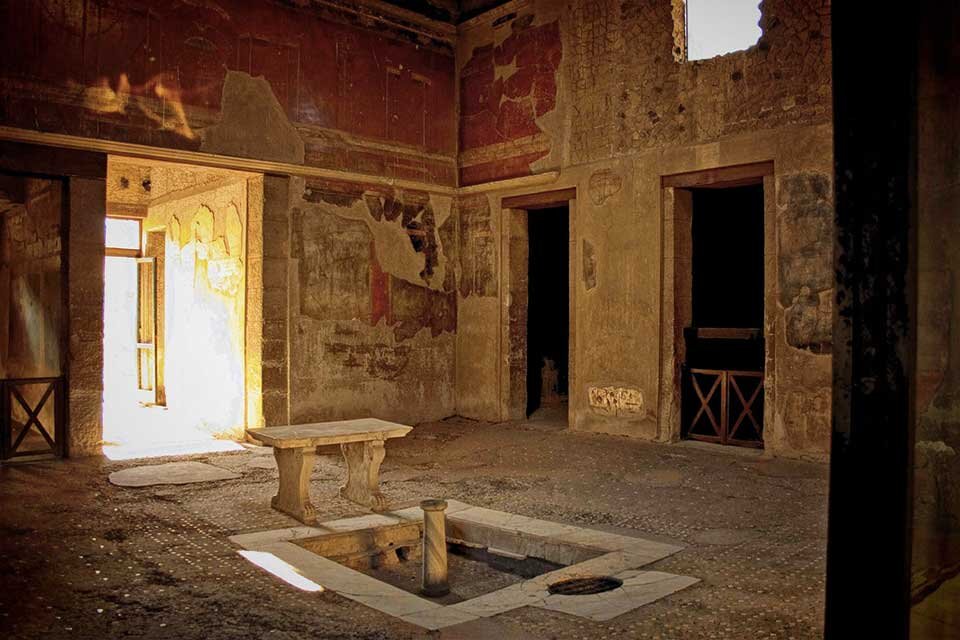


The Terme di Ercolano are among the best-preserved thermal complexes of ancient Rome, dating back to the 1st century AD. Buried by the eruption of Mount Vesuvius in 79 AD, they offer an extraordinary insight into the culture of Roman bathing and wellness. The complex was carefully organized, with separate areas for men and women and a clearly defined sequence of spaces designed to guide the body through a progressive and balanced thermal experience.
At the heart of the Roman bathing ritual was a precise spatial and sensory path, based on temperature, movement, and relaxation.
The frigidarium was the cold room, equipped with pools of cold water. It could be used either at the beginning of the ritual to tone the body or at the end, after exposure to heat, to close the pores, stimulate blood circulation, and provide a feeling of vitality and renewal. Architecturally, it was often one of the most monumental spaces, with high vaults and a strong scenographic impact, symbolizing purity and regeneration.
The tepidarium functioned as a transitional space with a mild, comfortable temperature. Its role was essential: it gradually prepared the body for the intense heat of the calidarium or gently accompanied it back toward cooler conditions. This room was conceived as a space of balance and comfort, where the body could relax without thermal shock. In modern terms, it represents the concept of thermal harmony and controlled relaxation.
The calidarium was the warm core of the baths. It featured hot water pools, steam-filled air, and floors and walls heated by the hypocaust system. This environment promoted deep perspiration, muscle relaxation, and detoxification. It was the most intense and immersive space, comparable today to a combination of a steam bath and a hot pool, and represented the peak of the sensory experience.
Complementing the bathing sequence was the gymnasium (or palaestra), an open or semi-open area dedicated to physical exercise. Here, visitors engaged in training, wrestling, running, and other athletic activities before entering the baths. The underlying principle was clear and remarkably modern: movement first, then heat and water, followed by rest and recovery.
The complete ritual followed a logical and holistic sequence: Gymnasium → Tepidarium → Calidarium → Frigidarium.
This integrated approach reveals that Roman baths were not merely places for hygiene, but sophisticated centers of health, social interaction, and psychophysical well-being. The Terme di Ercolano stand today as a fundamental reference for understanding the architectural, cultural, and experiential origins of contemporary spa design.